
Events List
Discover conferences, symposia and other events worldwide.
 View monthly calendar
 Submit your event

708 event(s) found
Tri-State Blood Cancer Conference
Blood Cancer United Blood Cancer Conferences are free education events for blood cancer patients, survivors, caregivers, family members and healthcare professionals to learn more about treatment options, emerging therapies, management of survivorship issues and Blood Cancer United resources.
 14/03/2026 - 14/03/2026
 In-person
 Leukemia & Lymphoma Society
 New York, NY, United States
 Marriott Marquis

ESMO Targeted Anticancer Therapies (TAT) Congress 2026
The journey of innovation in cancer treatment begins with early drug development. ESMO TAT serves as a dynamic, multi-stakeholder forum, uniting researchers, industry leaders, investors and regulators under one roof to accelerate the delivery of life-changing anticancer therapies to patients. Join us in the pursuit to advance cancer treatment: we look forward to seeing you at this transformative event, to share new data, foster collaboration, and tackle challenges that will drive early clinical development forward. Innovate. Collaborate. Advance.
15/03/2026 - 17/03/2026 In-person ESMO Paris, France Palais des Congrès
Advanced Therapies UK 2026
The Advanced Therapies Congress is Europe's largest commercial cell and gene therapy conference and exhibition. The event is for the leaders of pioneering ATMP companies and their most senior executives in charge of the latest tech and strategies that are driving the industry forward. The conferences brings together a community of 3,300 global executives at ExCeL London, to be inspired by 300 speakers and 75 start-ups over 2 incredible days. The Advanced Therapies Congress features speakers from across the entire value chain of cell and gene therapy development; forward-thinking pharma, biotech and start- up companies, researchers, clinicians, academics, HTAs, payers and regulators.
16/03/2026 - 17/03/2026 In-person Terrapin London, United Kingdom TBD ESMO Targeted Anticancer Therapies (TAT) Congress 2026
The journey of innovation in cancer treatment begins with early drug development. ESMO TAT serves as a dynamic, multi-stakeholder forum, uniting researchers, industry leaders, investors and regulators under one roof to accelerate the delivery of life-changing anticancer therapies to patients. Join us in the pursuit to advance cancer treatment: we look forward to seeing you at this transformative event, to share new data, foster collaboration, and tackle challenges that will drive early clinical development forward. Innovate. Collaborate. Advance.
16/03/2026 - 18/03/2026 In-person ESMO Paris, France Palais des Congrès
TROG 2026
TROG 2026 organized by TROG Cancer Research
17/03/2026 - 20/03/2026 In-person TROG Cancer Research Melbourne, VIC, Australia TBD Journées SFCE 2026
In French: "Nous avons le plaisir de vous informer d’une évolution importante dans l’organisation des journées scientifiques de la SFCE. À compter de mars 2026, notre traditionnel format biannuel laissera place à un congrès unique annuel d’une durée de trois jours. Ce nouveau format est souhaité par les membres de la SFCE et a été pensé pour mieux répondre aux réalités de terrain des professionnels de santé, en particulier en facilitant l’organisation au sein de nos services de soins. Il permettra également d’enrichir le contenu scientifique, de diversifier les échanges et de renforcer la dynamique collaborative entre tous les acteurs du secteur. Il permettra aussi, nous y travaillerons, à réunir davantage et en plus grand nombre, en un seul rendez-vous, tous les acteurs du soin et de la recherche pour les cancers et leucémies de l’enfant."
17/03/2026 - 19/03/2026 In-person SFCE Paris, France TBD
2nd International Cancer & Immuno-Oncology Conference
The 2nd Edition of International Cancer & Immuno-Oncology Conference (CIOC 2026) is set to take place from March 19-21, 2026, in Singapore and virtually. Designed to foster innovation and collaboration in oncology, this hybrid event will bring together leading experts to discuss advancements in cancer research under the theme "Transforming Cancer Care: Innovations, Integrations, and Impact". With a focus on translating research breakthroughs into clinical practice, the conference will serve as a global platform to explore cutting-edge developments in cancer biology, prevention, and treatment strategies.
18/03/2026 - 20/03/2026 Hybrid Magnus Group Singapore, Singapore Village Hotel Changi
Orchestrators of Spread: γδ T-cells in Metastatic Disease
Join us for a webinar by Prof. Seth Coffelt, PhD (CRUK).
18/03/2026 - 18/03/2026 Virtual Metastasis Research Society Online TBD
Journées SFCE 2026
In French: "Nous avons le plaisir de vous informer d’une évolution importante dans l’organisation des journées scientifiques de la SFCE. À compter de mars 2026, notre traditionnel format biannuel laissera place à un congrès unique annuel d’une durée de trois jours. Ce nouveau format est souhaité par les membres de la SFCE et a été pensé pour mieux répondre aux réalités de terrain des professionnels de santé, en particulier en facilitant l’organisation au sein de nos services de soins. Il permettra également d’enrichir le contenu scientifique, de diversifier les échanges et de renforcer la dynamique collaborative entre tous les acteurs du secteur. Il permettra aussi, nous y travaillerons, à réunir davantage et en plus grand nombre, en un seul rendez-vous, tous les acteurs du soin et de la recherche pour les cancers et leucémies de l’enfant."
18/03/2026 - 20/03/2026 In-person SFCE Paris, France TBD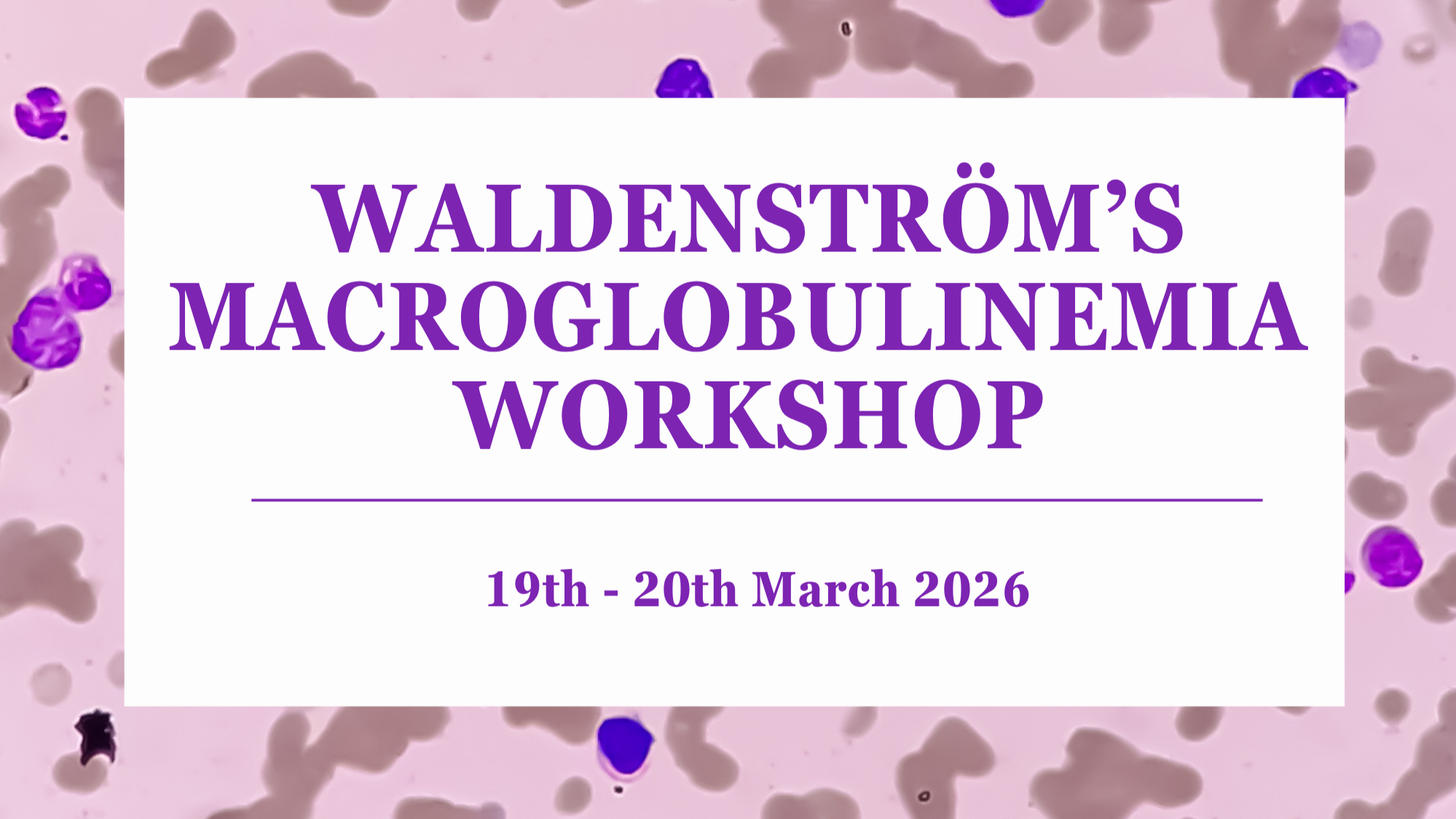
Workshop Macroglobulinémie de Waldenström
This event will highlight the underlying mechanisms of the disease, explore novel therapeutic approaches, and feature a patient-oriented session. Free access for researchers, clinicians, students and patients with a mandatory registration.
19/03/2026 - 20/03/2026 In-person SIRIC Paris, France UIC-P TOGA Masterclass Small Cell Lung Cancer
TOGA Masterclass Small Cell Lung Cancer organized by TOGA
20/03/2026 - 20/03/2026 In-person TOGA Melbourne, VIC, Australia TBD
4th PACRI International Meeting
The 4th PACRI International Annual Meeting is set to bring together African and global experts in cancer research, clinical practice, policy, and advocacy to explore how we can drive transformative change in cancer care across Africa. This conference will provide a dynamic platform for multi-disciplinary discussions on bridging the gap between cutting-edge cancer science and its real-world applications. Ensuring that innovation, equity, and patient-centered care shape the future of cancer treatment and prevention in Africa will be at the core of this event. With an emphasis on advancing cancer research and care, the conference will cover the latest breakthroughs in precision oncology, genomics, artificial intelligence (AI), and the critical role of the exposome in cancer risk, particularly in African populations. Through detailed discussions, delegates will examine how these innovations can be integrated into healthcare systems across Africa, providing an opportunity for researchers and clinicians to address the urgent need for more personalized treatments and early detection methods that consider the unique genetic, environmental, and socio-economic factors that contribute to cancer in the region. A key focus will also be placed on the intersection between cancer and infectious diseases, recognizing the significant burden of co-morbid infections, such as HIV, HPV, and hepatitis, in Africa and their role in cancer development and progression. This will include discussions on how integrated approaches can enhance cancer prevention and treatment strategies. Additionally, the role of cultural practices in shaping cancer care and patient outcomes will be examined, ensuring that research and clinical interventions are aligned with the cultural contexts and traditions of African communities.
21/03/2026 - 24/03/2026 Hybrid University of Pretoria PACRI, NCCRC, AAIMHS Johannesburg, South Africa The MaslowEBMT 52nd Annual Meeting
The EBMT 2026 in Madrid offers a unique opportunity to connect with experts and engage in the latest scientific developments. It is a key event for professionals in transplantation and cellular therapy, featuring specialised sessions for Physicians, Nurses, Data Managers, Statisticians, Quality Managers, Cell Therapists, Paediatricians, Pharmacists, Psychologists, Transplant Coordinators, Lab Scientists, Trainees, as well as Patients, Family Members and Donors.
21/03/2026 - 24/03/2026 In-person EBMT Madrid, Spain IFEMA Madrid EHA ReCon 2026
EHA is proud to announce the fou‘EHA ReCon’ is a great opportunity for researchers from all over the world who are deeply invested in the field of hematology. It aims to advance both basic and translational research. Attendees will benefit from an intimate but focused setting that fosters in-depth discussions, networking, and collaboration. Spanning 3.5 days, this format sets the conference apart from the broader, more clinically-oriented EHA Congress.‘EHA ReCon’ is a great opportunity for researchers from all over the world who are deeply invested in the field of hematology. It aims to advance both basic and translational research. Attendees will benefit from an intimate but focused setting that fosters in-depth discussions, networking, and collaboration. Spanning 3.5 days, this format sets the conference apart from the broader, more clinically-oriented EHA Congress.‘EHA ReCon’ is a great opportunity for researchers from all over the world who are deeply invested in the field of hematology. It aims to advance both basic and translational research. Attendees will benefit from an intimate but focused setting that fosters in-depth discussions, networking, and collaboration. Spanning 3.5 days, this format sets the conference apart from the broader, more clinically-oriented EHA Congress.‘EHA ReCon’ is a great opportunity for researchers from all over the world who are deeply invested in the field of hematology. It aims to advance both basic and translational research. Attendees will benefit from an intimate but focused setting that fosters in-depth discussions, networking, and collaboration. Spanning 3.5 days, this format sets the conference apart from the broader, more clinically-oriented EHA Congress.‘EHA ReCon’ is a great opportunity for researchers from all over the world who are deeply invested in the field of hematology. It aims to advance both basic and translational research. Attendees will benefit from an intimate but focused setting that fosters in-depth discussions, networking, and collaboration. Spanning 3.5 days, this format sets the conference apart from the broader, more clinically-oriented EHA Congress.‘EHA ReCon’ is a great opportunity for researchers from all over the world who are deeply invested in the field of hematology. It aims to advance both basic and translational research. Attendees will benefit from an intimate but focused setting that fosters in-depth discussions, networking, and collaboration. Spanning 3.5 days, this format sets the conference apart from the broader, more clinically-oriented EHA Congress.‘EHA ReCon’ is a great opportunity for researchers from all over the world who are deeply invested in the field of hematology. It aims to advance both basic and translational research. Attendees will benefit from an intimate but focused setting that fosters in-depth discussions, networking, and collaboration. Spanning 3.5 days, this format sets the conference apart from the broader, more clinically-oriented EHA Congress.‘EHA ReCon’ is a great opportunity for researchers from all over the world who are deeply invested in the field of hematology. It aims to advance both basic and translational research. Attendees will benefit from an intimate but focused setting that fosters in-depth discussions, networking, and collaboration. Spanning 3.5 days, this format sets the conference apart from the broader, more clinically-oriented EHA Congress.‘EHA ReCon’ is a great opportunity for researchers from all over the world who are deeply invested in the field of hematology. It aims to advance both basic and translational research. Attendees will benefit from an intimate but focused setting that fosters in-depth discussions, networking, and collaboration. Spanning 3.5 days, this format sets the conference apart from the broader, more clinically-oriented EHA Congress.‘EHA ReCon’ is a great opportunity for researchers from all over the world who are deeply invested in the field of hematology. It aims to advance both basic and translational research. Attendees will benefit from an intimate but focused setting that fosters in-depth discussions, networking, and collaboration. Spanning 3.5 days, this format sets the conference apart from the broader, more clinically-oriented EHA Congress.‘EHA ReCon’ is a great opportunity for researchers from all over the world who are deeply invested in the field of hematology. It aims to advance both basic and translational research. Attendees will benefit from an intimate but focused setting that fosters in-depth discussions, networking, and collaboration. Spanning 3.5 days, this format sets the conference apart from the broader, more clinically-oriented EHA Congress.‘EHA ReCon’ is a great opportunity for researchers from all over the world who are deeply invested in the field of hematology. It aims to advance both basic and translational research. Attendees will benefit from an intimate but focused setting that fosters in-depth discussions, networking, and collaboration. Spanning 3.5 days, this format sets the conference apart from the broader, more clinically-oriented EHA Congress.‘EHA ReCon’ is a great opportunity for researchers from all over the world who are deeply invested in the field of hematology. It aims to advance both basic and translational research. Attendees will benefit from an intimate but focused setting that fosters in-depth discussions, networking, and collaboration. Spanning 3.5 days, this format sets the conference apart from the broader, more clinically-oriented EHA Congress.‘EHA ReCon’ is a great opportunity for researchers from all over the world who are deeply invested in the field of hematology. It aims to advance both basic and translational research. Attendees will benefit from an intimate but focused setting that fosters in-depth discussions, networking, and collaboration. Spanning 3.5 days, this format sets the conference apart from the broader, more clinically-oriented EHA Congress.‘EHA ReCon’ is a great opportunity for researchers from all over the world who are deeply invested in the field of hematology. It aims to advance both basic and translational research. Attendees will benefit from an intimate but focused setting that fosters in-depth discussions, networking, and collaboration. Spanning 3.5 days, this format sets the conference apart from the broader, more clinically-oriented EHA Congress.‘EHA ReCon’ is a great opportunity for researchers from all over the world who are deeply invested in the field of hematology. It aims to advance both basic and translational research. Attendees will benefit from an intimate but focused setting that fosters in-depth discussions, networking, and collaboration. Spanning 3.5 days, this format sets the conference apart from the broader, more clinically-oriented EHA Congress.‘EHA ReCon’ is a great opportunity for researchers from all over the world who are deeply invested in the field of hematology. It aims to advance both basic and translational research. Attendees will benefit from an intimate but focused setting that fosters in-depth discussions, networking, and collaboration. Spanning 3.5 days, this format sets the conference apart from the broader, more clinically-oriented EHA Congress.‘EHA ReCon’ is a great opportunity for researchers from all over the world who are deeply invested in the field of hematology. It aims to advance both basic and translational research. Attendees will benefit from an intimate but focused setting that fosters in-depth discussions, networking, and collaboration. Spanning 3.5 days, this format sets the conference apart from the broader, more clinically-oriented EHA Congress.‘EHA ReCon’ is a great opportunity for researchers from all over the world who are deeply invested in the field of hematology. It aims to advance both basic and translational research. Attendees will benefit from an intimate but focused setting that fosters in-depth discussions, networking, and collaboration. Spanning 3.5 days, this format sets the conference apart from the broader, more clinically-oriented EHA Congress.‘EHA ReCon’ is a great opportunity for researchers from all over the world who are deeply invested in the field of hematology. It aims to advance both basic and translational research. Attendees will benefit from an intimate but focused setting that fosters in-depth discussions, networking, and collaboration. Spanning 3.5 days, this format sets the conference apart from the broader, more clinically-oriented EHA Congress.rth edition of the EHA Research Conference, titled ‘From cradle to grave: normal and malignant hematopoiesis in young and aged settings.’ ‘EHA ReCon’ is a great opportunity for researchers from all over the world who are deeply invested in the field of hematology. It aims to advance both basic and translational research. Attendees will benefit from an intimate but focused setting that fosters in-depth discussions, networking, and collaboration. Spanning 3.5 days, this format sets the conference apart from the broader, more clinically-oriented EHA Congress.‘EHA ReCon’ is a great opportunity for researchers from all over the world who are deeply invested in the field of hematology. It aims to advance both basic and translational research. Attendees will benefit from an intimate but focused setting that fosters in-depth discussions, networking, and collaboration. Spanning 3.5 days, this format sets the conference apart from the broader, more clinically-oriented EHA Congress.‘EHA ReCon’ is a great opportunity for researchers from all over the world who are deeply invested in the field of hematology. It aims to advance both basic and translational research. Attendees will benefit from an intimate but focused setting that fosters in-depth discussions, networking, and collaboration. Spanning 3.5 days, this format sets the conference apart from the broader, more clinically-oriented EHA Congress.‘EHA ReCon’ is a great opportunity for researchers from all over the world who are deeply invested in the field of hematology. It aims to advance both basic and translational research. Attendees will benefit from an intimate but focused setting that fosters in-depth discussions, networking, and collaboration. Spanning 3.5 days, this format sets the conference apart from the broader, more clinically-oriented EHA Congress.‘EHA ReCon’ is a great opportunity for researchers from all over the world who are deeply invested in the field of hematology. It aims to advance both basic and translational research. Attendees will benefit from an intimate but focused setting that fosters in-depth discussions, networking, and collaboration. Spanning 3.5 days, this format sets the conference apart from the broader, more clinically-oriented EHA Congress.‘EHA ReCon’ is a great opportunity for researchers from all over the world who are deeply invested in the field of hematology. It aims to advance both basic and translational research. Attendees will benefit from an intimate but focused setting that fosters in-depth discussions, networking, and collaboration. Spanning 3.5 days, this format sets the conference apart from the broader, more clinically-oriented EHA Congress.‘EHA ReCon’ is a great opportunity for researchers from all over the world who are deeply invested in the field of hematology. It aims to advance both basic and translational research. Attendees will benefit from an intimate but focused setting that fosters in-depth discussions, networking, and collaboration. Spanning 3.5 days, this format sets the conference apart from the broader, more clinically-oriented EHA Congress.‘EHA ReCon’ is a great opportunity for researchers from all over the world who are deeply invested in the field of hematology. It aims to advance both basic and translational research. Attendees will benefit from an intimate but focused setting that fosters in-depth discussions, networking, and collaboration. Spanning 3.5 days, this format sets the conference apart from the broader, more clinically-oriented EHA Congress.‘EHA ReCon’ is a great opportunity for researchers from all over the world who are deeply invested in the field of hematology. It aims to advance both basic and translational research. Attendees will benefit from an intimate but focused setting that fosters in-depth discussions, networking, and collaboration. Spanning 3.5 days, this format sets the conference apart from the broader, more clinically-oriented EHA Congress.‘EHA ReCon’ is a great opportunity for researchers from all over the world who are deeply invested in the field of hematology. It aims to advance both basic and translational research. Attendees will benefit from an intimate but focused setting that fosters in-depth discussions, networking, and collaboration. Spanning 3.5 days, this format sets the conference apart from the broader, more clinically-oriented EHA Congress.‘EHA ReCon’ is a great opportunity for researchers from all over the world who are deeply invested in the field of hematology. It aims to advance both basic and translational research. Attendees will benefit from an intimate but focused setting that fosters in-depth discussions, networking, and collaboration. Spanning 3.5 days, this format sets the conference apart from the broader, more clinically-oriented EHA Congress.
22/03/2026 - 25/03/2026 In-person European Hematology Association (EHA) Espoo, Finland DIPOLI – Aalto University BIO-Europe Spring®
BIO-Europe Spring brings together the global life science community, facilitating more than 20,000 one-to-one partnering meetings.
22/03/2026 - 24/03/2026 In-person Informa Lisbon, Portugal Feira Internacional de Lisboa EBMT 52nd Annual Meeting
The EBMT 2026 in Madrid offers a unique opportunity to connect with experts and engage in the latest scientific developments. It is a key event for professionals in transplantation and cellular therapy, featuring specialised sessions for Physicians, Nurses, Data Managers, Statisticians, Quality Managers, Cell Therapists, Paediatricians, Pharmacists, Psychologists, Transplant Coordinators, Lab Scientists, Trainees, as well as Patients, Family Members and Donors.
22/03/2026 - 25/03/2026 In-person EBMT Madrid, Spain IFEMA Madrid 4th PACRI International Meeting
The 4th PACRI International Annual Meeting is set to bring together African and global experts in cancer research, clinical practice, policy, and advocacy to explore how we can drive transformative change in cancer care across Africa. This conference will provide a dynamic platform for multi-disciplinary discussions on bridging the gap between cutting-edge cancer science and its real-world applications. Ensuring that innovation, equity, and patient-centered care shape the future of cancer treatment and prevention in Africa will be at the core of this event. With an emphasis on advancing cancer research and care, the conference will cover the latest breakthroughs in precision oncology, genomics, artificial intelligence (AI), and the critical role of the exposome in cancer risk, particularly in African populations. Through detailed discussions, delegates will examine how these innovations can be integrated into healthcare systems across Africa, providing an opportunity for researchers and clinicians to address the urgent need for more personalized treatments and early detection methods that consider the unique genetic, environmental, and socio-economic factors that contribute to cancer in the region. A key focus will also be placed on the intersection between cancer and infectious diseases, recognizing the significant burden of co-morbid infections, such as HIV, HPV, and hepatitis, in Africa and their role in cancer development and progression. This will include discussions on how integrated approaches can enhance cancer prevention and treatment strategies. Additionally, the role of cultural practices in shaping cancer care and patient outcomes will be examined, ensuring that research and clinical interventions are aligned with the cultural contexts and traditions of African communities.
22/03/2026 - 25/03/2026 Hybrid University of Pretoria PACRI, NCCRC, AAIMHS Johannesburg, South Africa The Maslow 11th International School of Immunotherapy: Targeting Immune Aging
Welcome to the 11th edition of our International Immunotherapy School. This year, we have invited leading experts from around the world to examine how aging reshapes immune cell development, tissue immunity, and systemic inflammation—and how these processes drive cancer, cardiovascular disease, neurodegeneration, and impaired host defense. The course integrates foundational immunology with emerging human and translational data, with a focus on actionable pathways and therapeutic strategies to restore immune balance in older adults. It is designed for graduate students, postdoctoral fellows, clinicians, and investigators interested in aging biology, immunology, and translational medicine. The 3-day course will be online via Zoom and feature live interactions with Postdocs, Ph.D. students and junior faculty from four continents.
23/03/2026 - 25/03/2026 Virtual Icahn School of Medicine at Mount Sinai, Sorbonne Université, Institut Curie, Universidade de São Paulo, Nantes Université, International Union of Immunology Societies Brazil Zoom AACR Special Conference in Cancer Research: Brain Cancer
Held every 3 years, the AACR Special Conference on Brain Cancer brings together a multidisciplinary community of researchers and clinicians to address one of the most lethal and biologically complex forms of cancer. The 2026 meeting, taking place March 23–25 in Philadelphia, will continue this tradition by highlighting advances in both adult and pediatric brain tumors, from glioblastoma and medulloblastoma to rarer CNS subtypes. The program will spotlight the neuroscience of gliomas, advances in neuro-immuno-oncology, cellular therapies for nervous system tumors, brain borders and CNS trafficking, next-generation diagnostics and biomarkers, updates in brain metastases and leptomeningeal disease, strategies to solve tumor heterogeneity using spatial and 3D genomics, and the latest in clinical trials.
23/03/2026 - 25/03/2026 In-person AACR Philadelphia, PA, United States Philadelphia Marriott Downtown EHA ReCon 2026
EHA is proud to announce the fourth ‘EHA ReCon’, which aims to advance both basic and translational research. Attendees will benefit from an intimate but focused setting that fosters in-depth discussions, networking, and collaboration. Spanning 3.5 days, this format sets the conference apart from the broader, more clinically-oriented EHA Congress.
23/03/2026 - 26/03/2026 In-person European Hematology Association (EHA) Espoo, Finland DIPOLI – Aalto University
Congrès de la SFH 2026
France's premier scientific & medical congress in Hematology and Hemato-Oncology.
24/03/2026 - 26/03/2026 In-person Société Française d'Hématologie (SFH) Paris, France Palais des Congrès (Porte Maillot)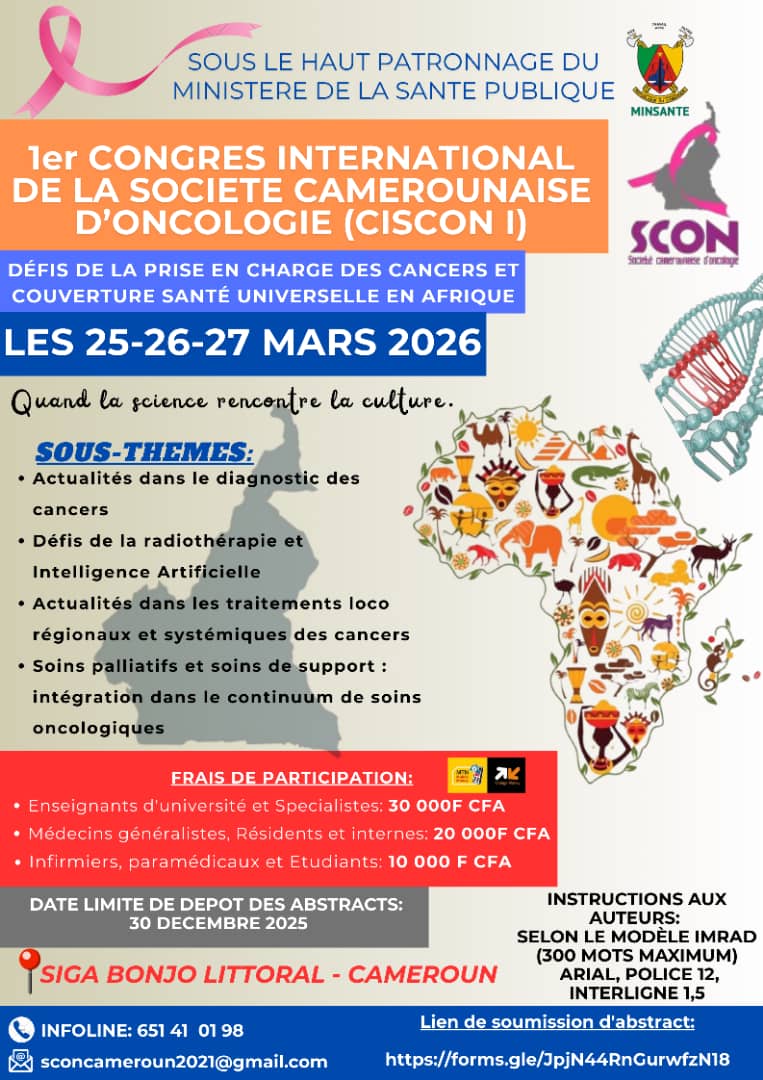
CISCON I: 1er Congrès international de la Société camerounaise d’oncologie
In French: "Sous le haut patronage du Ministère de la Santé Publique du Cameroun, la Société camerounaise d’oncologie (SCON) organise son tout premier Congrès international du 25 au 27 mars 2026 à Siga Bonjo (Littoral, Cameroun). Le thème central : « Défis de la prise en charge des cancers et couverture santé universelle en Afrique »."
24/03/2026 - 26/03/2026 In-person SCON Siga Bonjo, Cameroon TBD
2026 SITC Spring Scientific: Next-generation Cellular Therapies, T cell Engagers, and Combinations
The 2026 SITC Spring Scientific will bring together experts in cell therapy, drug development, and immuno-oncology to address the timely topic of next-generation cellular therapies, T cell engagers, and combination therapies to treat cancer. The program will feature in-depth explorations and discussions of recent scientific breakthroughs, cutting-edge technologies, and the newest clinical studies that address the development and advancement of novel immuno-oncology agents and how these agents can be combined with other therapies to overcome tumor evasion of immunity.
24/03/2026 - 26/03/2026 Hybrid SITC Tuscon, AZ, United States El Conquistador Tucson
15th European Breast Cancer Conference
In 1998, the European Breast Cancer Conference was set up to provide a platform for breast cancer specialists and patients to discuss the multidisciplinary approach to breast cancer care. It provided the specialists with the latest updates in treatment. It was the first conference of its kind, which had a patient advocacy organisation as a partner, ensuring that latest information reached the patients. A truly multidisciplinary collaboration and education is needed in breast cancer with an approach to provide equality across borders.
24/03/2026 - 26/03/2026 In-person EBC Council Barcelona, Spain CCIB